The Mystery of the Blank Plastic: Why Won’t It Mark?Have you ever tried firing a high-tech fiber laser at a pristine piece of white plastic, expecting a gorgeous, crisp black logo, only to end up with… absolutely nothing? Or worse, a faint, blurry smudge that looks like a smudge of dirt? It is incredibly frustrating. You’ve spent thousands of dollars on a state-of-the-art industrial laser system, yet the material refuses to cooperate.
The Science Behind Laser-Plastic InteractionsTo understand this headache, we have to look at how lasers and polymers talk to each other. When a laser beam hits a surface, it needs to be absorbed to cause a change. If the material doesn’t absorb the light, the energy passes straight through or bounces right off. Think of it like trying to catch a shadow—without a physical barrier to stop the light, nothing happens. Why Standard White Plastics Reflect Laser EnergyStandard white plastics—whether they are made of Polypropylene (PP), Polyethylene (PE), or Acetal (POM)—are notorious for this. They are often packed with titanium dioxide ($TiO_2$) to give them that clean, bright white look. Unfortunately, $TiO_2$ is fantastic at scattering and reflecting near-infrared laser light (the exact wavelength used by most fiber lasers). The laser beam simply bounces away, leaving your plastic completely unmarked and your production line stalled. Enter Laser Marking Additives: The Secret SauceSo, how do we fix this game of optical hide-and-seek? The answer isn’t buying a bigger, more expensive laser machine. The magic happens inside the plastic itself, thanks to a clever chemical intervention. What is a Laser Marking Masterbatch?Laser marking additives are specialty chemical formulations—often delivered in a convenient pellet form called a masterbatch—that act as tiny internal light absorbers. When mixed into raw plastic resin before molding or extrusion, these particles act like miniature lightning rods. They specifically target and absorb the laser’s wavelength, trapping the energy and instantly converting it into localized heat.
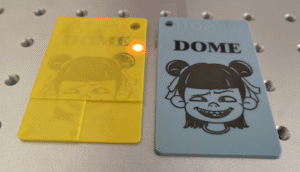
How DOME Materials Bridges the GapThis is where DOME Materials steps into the spotlight. With over 16 years of industry expertise, DOME specializes in formulating laser-sensitive masterbatches that make stubborn plastics highly reactive. Instead of a weak, illegible mark, DOME’s additives ensure that when the laser flashes, the plastic responds with a sharp, high-contrast, permanent black mark without altering the base color or structural integrity of your product.
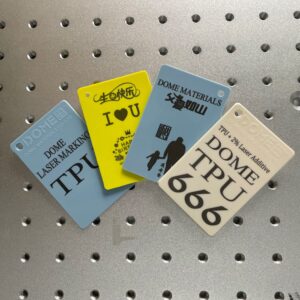
The Chemistry of the Perfect Dark MarkWhat actually happens when the laser kisses a plastic embedded with a DOME additive? It’s a beautiful dance of chemistry and thermodynamics. Carbonization vs. Foaming: Understanding the DifferenceWhen lasers hit plastics, they generally trigger one of two surface reactions: carbonization or foaming. Foaming creates microscopic gas bubbles that trap light, producing a white mark on a dark surface. But when your goal is a deep, dark mark on light-colored plastic, you are aiming for carbonization. How Carbonization Generates Jet-Black ContrastWhen the fiber laser strikes a DOME-optimized white plastic, the embedded additives rapidly absorb the near-infrared energy. The temperature at that exact localized spot skyrockets to the polymer’s thermal degradation point. Because the oxygen supply inside the plastic matrix is strictly limited, the plastic doesn’t catch fire; instead, it undergoes controlled charring, or carbonization. The local carbon bonds break down, creating a rich, jet-black mark trapped safely beneath or right at the surface. It is sharp, waterproof, chemical-resistant, and entirely permanent. Why Choose DOME Materials for Your Plastics?Not all additives are created equal. Use the wrong formula, and you might turn your beautiful white plastic a muddy gray before the laser even touches it. Tailored Solutions for Every Polymer (PP, PE, ABS, PC, TPU, Nylon)Different polymers have entirely different molecular backbones. A recipe that works flawlessly for Polycarbonate (PC) might fail miserably on Polypropylene (PP). DOME Materials understands this complexity. They offer a complete spectrum of customized laser-activated additives specifically engineered for various matrices—including ABS, TPU, PBT, PA (Nylon), and PC/ABS alloys. Cost-Effectiveness and High Efficiency at Scale20W fiber laser systems can operate seamlessly with DOME’s solutions. Because these masterbatches are highly optimized, you only need a remarkably small dosage—typically 1% to 3% concentration—to achieve incredible marking speeds. Compared to traditional, messy ink-pad printing or slow labeling systems, DOME additives can boost production speeds by 25% or more while slashing long-term consumable costs to zero.
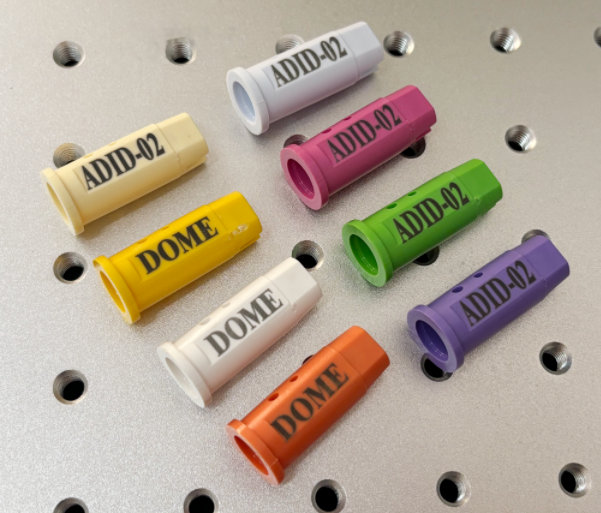
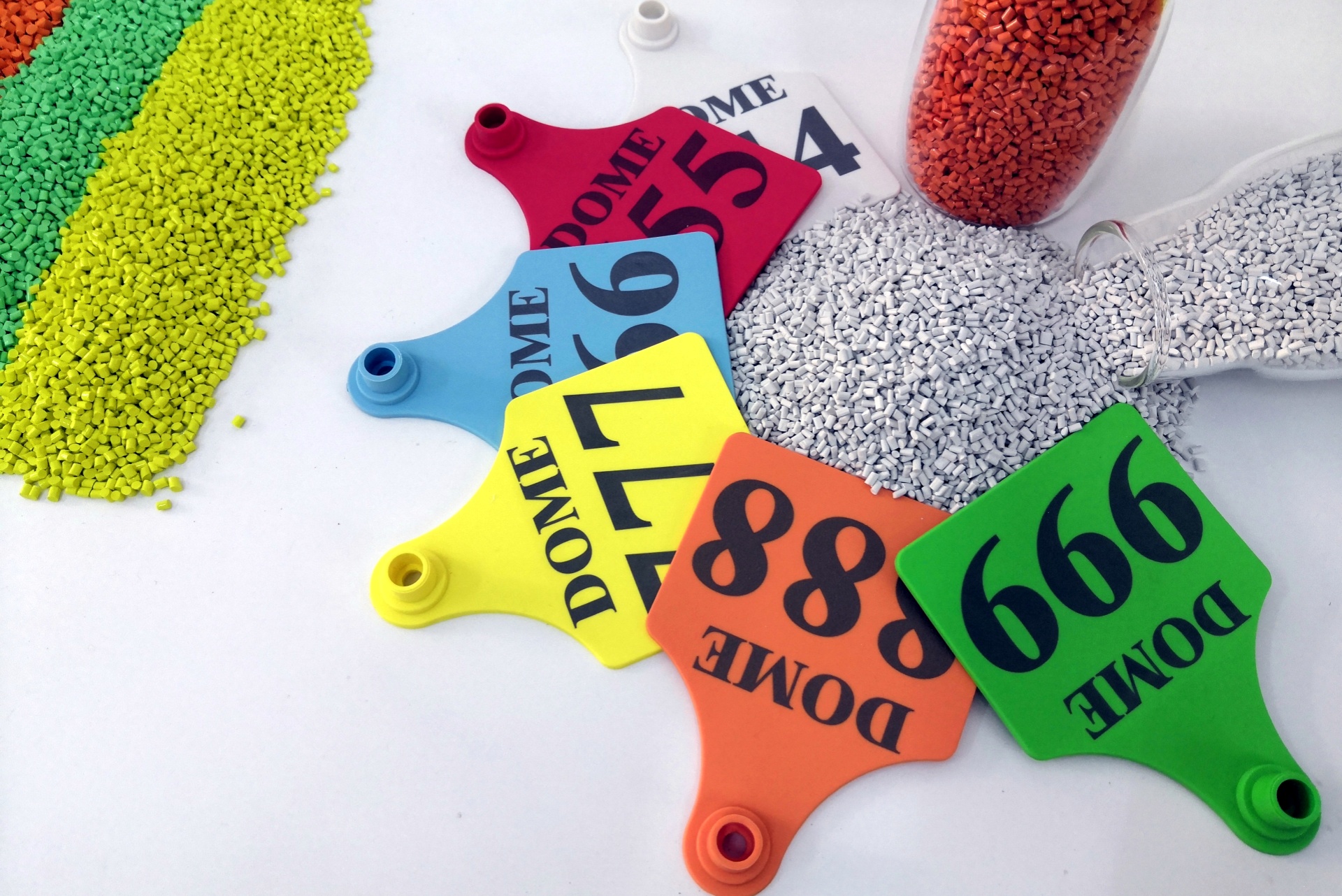
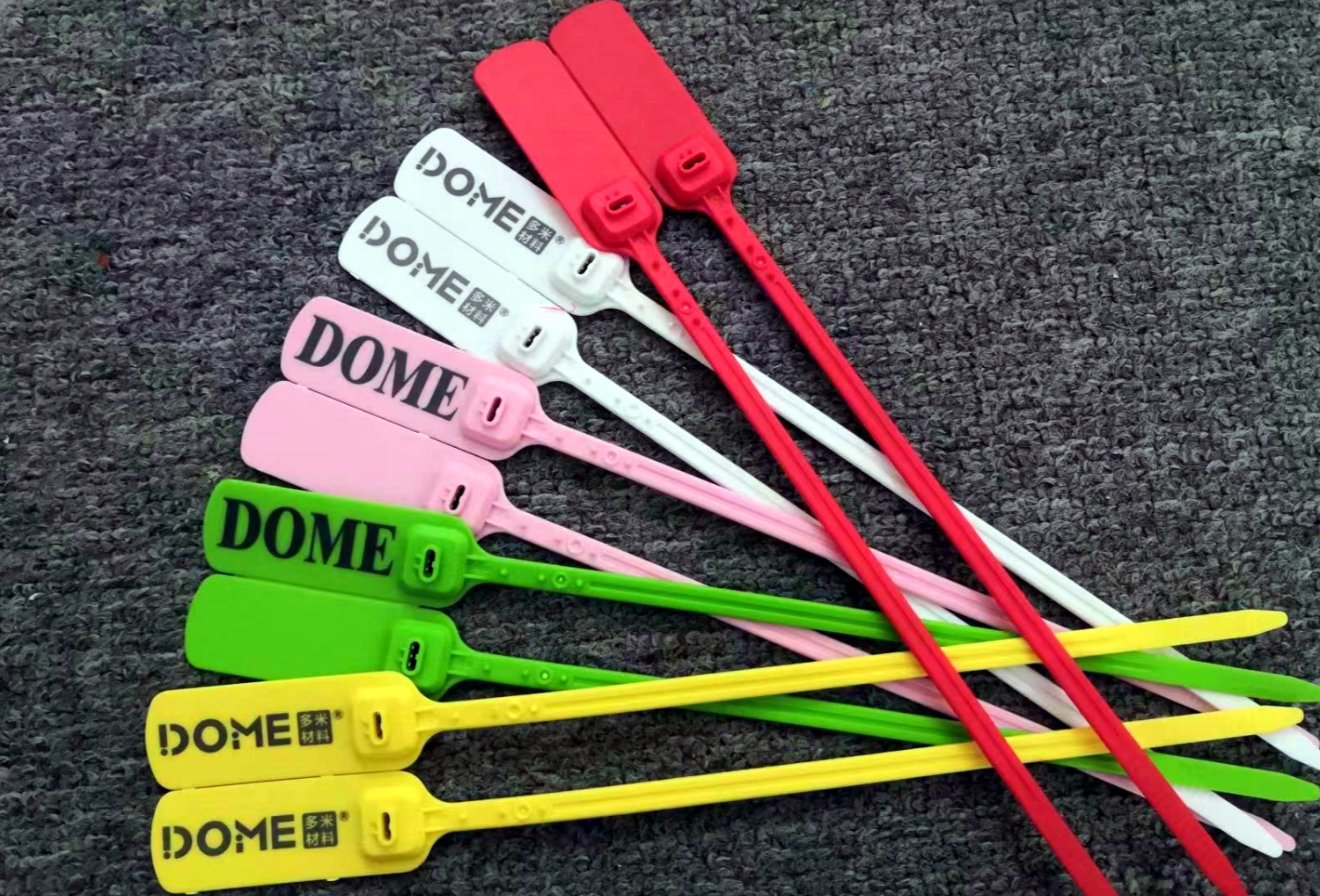
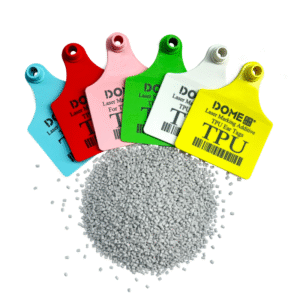
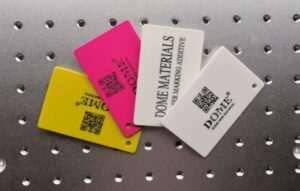
Step-by-Step Guide to Achieving High-Contrast Black MarksReady to transform your manufacturing line? Here is how to execute the process flawlessly. Step 1: Selecting the Right DOME Masterbatch Dosage (1% to 3%)Start by partnering with DOME to match their specific masterbatch (like their universal or polymer-specific hot-sale series) to your base resin. For most white or light-colored polymers utilizing a standard 20W Fiber Laser, a low let-down ratio of 1% to 2% is the sweet spot. Step 2: Proper Material Preparation and ProcessingBefore tossing everything into the injection molding machine or extruder, ensure your raw materials are thoroughly dried (usually 4 to 8 hours, depending on the resin). Blend the DOME masterbatch evenly with your white plastic pellets. Because DOME designs its masterbatches for excellent dispersion, they integrate seamlessly into standard molding cycles without clumping or altering your component’s mechanical dimensions. Step 3: Fine-Tuning Your Fiber Laser ParametersOnce your white plastic parts are molded, place them under your industrial fiber laser. Because the additive does the heavy lifting of absorbing the light, you don’t need to crank your laser power to max. Optimize your frequency, speed, and pulse duration. You’ll watch a beautiful, high-contrast black mark trace across the white plastic surface with flawless, crisp edge detail. Industrial Applications: Where Crisp Marks Matter MostWhere do we see this technology making the biggest waves? Anywhere traceability and durability are non-negotiable: * Livestock Ear Tags & Security Seals: Exposed to harsh weather, mud, and UV rays, these white plastic tags must remain readable for years. * Automotive Interior & Under-hood Parts: Day-to-day wear and tear or exposure to oils won’t smudge a carbonized laser mark. * Medical Devices: Catheters, tubes, and surgical tools require sterile, ink-free markings that can survive repeated autoclaving. * Consumer Electronics & Packaging: QR codes, barcodes, and serial numbers need razor-sharp edges to be easily read by optical scanners.
Conclusion: Permanence is Just an Additive AwayGetting a stark, crisp black mark on white plastic doesn’t have to be an elusive manufacturing puzzle. By utilizing DOME Materials Laser Marking Additives, you efficiently eliminate the optical reflectivity of light-colored polymers. These advanced masterbatches safely guide the laser’s energy to form a permanent, deeply contrasting carbonized mark that will never fade, peel, or scratch off. Stop fighting your materials and start optimizing them—because high-quality branding and flawless traceability should always be a seamless part of your production process. |
Frequently Asked Questions (FAQs)
Q1: Will adding DOME laser marking additives change the original white color of my plastic parts?
A1: No. DOME Materials formulations are carefully engineered to minimize visual interference. At the recommended low dosage percentages (1%–3%), they disperse thoroughly within the polymer matrix, preserving your plastic’s clean white or light-colored background aesthetic before laser exposure.
Q2: What type of laser machine is best suited for creating black marks using these additives?
A2: Continuous or pulsed Ytterbium Fiber Laser systems (typically 20W) operating in the near-infrared spectrum are ideal for triggering the high-contrast carbonization reaction when paired with DOME laser-activated masterbatches.
Q3: Can these laser marking additives be used safely for medical devices or food packaging?
A3: Yes! DOME produces highly specialized, compliant additive grades suitable for sensitive applications. Because laser marking is a non-contact process that replaces external inks and solvent chemicals, it eliminates contamination risks, making it excellent for medical and packaging regulations.
Q4: How do laser additives affect the recycling process of the plastic?
A4: They actually improve it! Traditional adhesive labels and printing inks contaminate plastic waste streams and throw off automated Near-Infrared (NIR) sorting sensors. By switching to laser marking additives, you create a truly mono-material part that sorting systems can easily identify and recycle.
Q5: Is it possible to test DOME additives before committing to a massive bulk order?
A5: Absolutely. DOME Materials provides highly accommodating value-added customer services, including free raw material samples, free proofing support, and custom modification options tailored to your specific polymer projects.
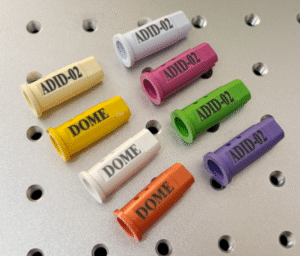
For a visual demonstration of how these specialty additives transform laser performance on real-world molded plastic parts, you can check out this DOME Laser-sensitive Additives Demonstration. This video provides a direct, side-by-side comparison illustrating how choosing the right formula determines whether your final product achieves a crisp, bright engraving or a blurry, hazy result.