Introduction: Why PFAS Regulations Are Drawing Attention Across the Plastics Value Chain?
PFAS regulations are no longer a distant policy discussion. Across Europe, regulatory authorities, OEMs, and material suppliers are actively reassessing the role of per- and polyfluoroalky substances in plastics, additives, and industrial processes. For manufacturers serving automotive, electronics, medical, and industrial markets, this shift raises practical questions about material selection, formulation strategies, supply chain transparency, and long-term product compliance.
At the same time, it presents an opportunity to evaluate fluorine-free alternatives—including fluorine-free laser marking additives—as part of a broader move toward sustainable plastic manufacturing.
What Are PFAS?
PFAS are a large family of synthetic chemicals characterised by strong carbon–fluorine bonds, which make them highly persistent in the environment. In the plastics sector, PFAS appear in several roles. They are used as polymer processing aids in thermoplastics to improve melt flow and surface finish, as flame retardants and anti-drip additives, and as surface treatment agents for coatings and films.
Because PFAS are used at different stages of the value chain—as processing aids, additives, coatings, and article components—their potential regulatory treatment has implications well beyond raw material suppliers.

How PFAS Regulations May Affect the Plastics Industry?
Regulations Already in Effect
The Packaging and Packaging Waste Regulation (PPWR) introduced PFAS limits for food-contact packaging, with requirements applying from August 2026. These limits cover individual PFAS, sums of PFAS, and total PFAS content. While this regulation focuses on packaging, it illustrates how PFAS restrictions can translate into specific concentration limits and testing obligations for plastic products
The Universal PFAS Restriction Proposal Under REACH
In 2026, ECHA’s committees for Risk Assessment and Socio-Economic Analysis published draft opinions, with final opinions expected by the end of 2026.
It is important to note that this proposal is not yet law. Its scope, derogations, and timelines remain subject to further evaluation and political decision-making. Nevertheless, its direction is clear: manufacturers should anticipate increasing scrutiny of PFAS across plastic articles and formulations.

Potential Business Implications
For plastics manufacturers, the evolving regulatory environment creates several practical pressures:
Material selection and reformulation: Replacing PFAS-containing processing aids or additives may require adjustments to formulations, particularly where melt flow, surface quality, or flame performance are critical.
Supply chain management: PFAS-related risks are already influencing procurement decisions, product certification, and customer due diligence requirements. Suppliers may need to provide clearer documentation on PFAS content and intentional use.
Compliance costs: Substitution and testing can involve investment in new formulations, validation, and regulatory documentation.
Export risk: Products placed on the EU market will need to meet applicable PFAS requirements, and non-compliance can affect market access.
How DOME Fluorine-Free Laser Marking Additives Can Support Manufacturers
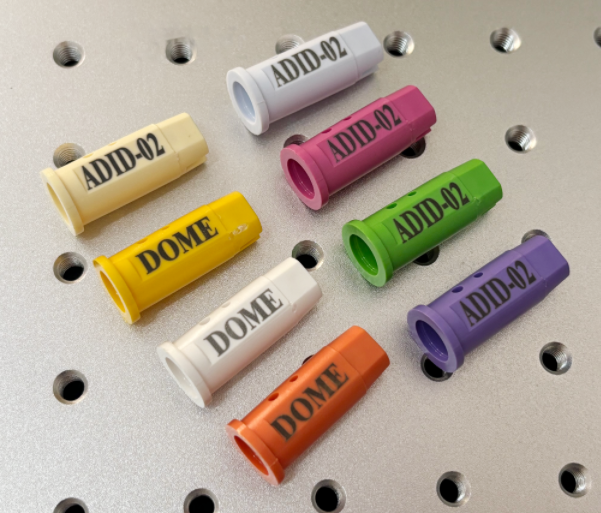
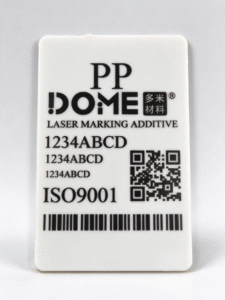
Laser marking is widely used in plastics for permanent identification, traceability, and branding. Laser marking additives work by absorbing laser energy and converting it into a visible mark, often through controlled thermal effects within the polymer matrix. In some formulations, fluorinated compounds or fluorine-doped materials have been used as laser absorbers.

Fluorine-free laser marking additives offer an alternative approach. From a formulation and compliance perspective, they can help manufacturers:
1.Reduce reliance on fluorine-containing additives in laser-markable plastic compounds, supporting broader PFAS reduction strategies.
2.Simplify supply chain communication by removing a potential PFAS-containing component from the additive package.
3.Support sustainable product development by aligning laser marking performance with emerging material preferences for fluorine-free formulations.
4.Maintain marking capability across common thermoplastics, subject to appropriate testing and validation.
These additives are not a universal solution. Laser marking performance depends on polymer type, additive loading, laser wavelength, and processing parameters. Manufacturers should evaluate compatibility and marking quality for each specific application.

Conclusion and Call to Action
PFAS regulations are reshaping expectations across the plastics value chain. While the broad REACH restriction remains under development, already-applicable measures such as the PPWR’s food-contact limits signal that PFAS will face increasing regulatory attention. For manufacturers, the practical response is to understand where PFAS are used, evaluate fluorine-free alternatives, and build testing and documentation into product development.
If you are exploring fluorine-free laser marking additives for your plastic applications, we invite you to contact our technical team. We can discuss compatibility with your material systems, arrange sample testing, and provide support as you evaluate whether a fluorine-free approach fits your performance and compliance needs.